
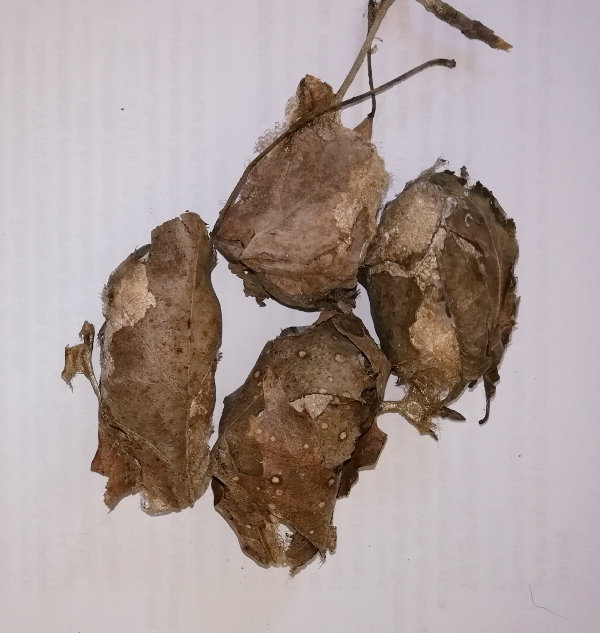
Product: Live Cocoons of Antheraea polyphemus
Info: Sold individually. Orders of 2 or more pcs will include approx. 50% males and females
Origin: F1 from Canada
Host Plants: Quercus, Carpinus, Betula, Liquidambar, Acer and many more
Hatching time: spring 2027
€6,50
In stock
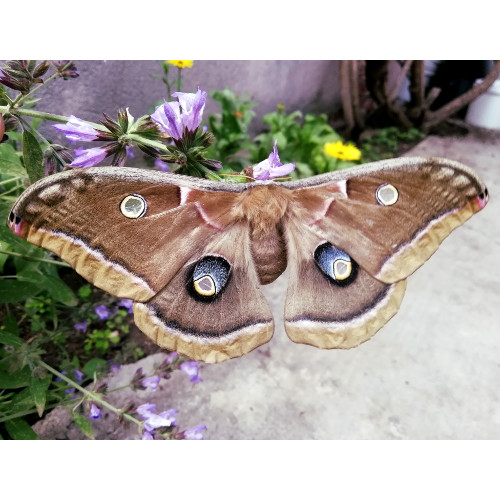
Discover one of North America’s most iconic giant silk moths with our live Antheraea polyphemus cocoons. Commonly known as the Polyphemus Moth, Antheraea polyphemus is one of the largest and most recognizable moth species native to North America. Famous for its impressive wingspan, beautiful tan and brown coloration, and striking eyespots, this spectacular Saturniid moth is highly valued by insect breeders, educators, photographers, and nature enthusiasts around the world.
Our Antheraea polyphemus cocoons for sale come from carefully maintained breeding stock, allowing you to experience the complete life cycle of one of the most fascinating giant silk moth species. Watching an adult Polyphemus Moth emerge from its cocoon is an extraordinary experience and a perfect introduction to the world of Saturniidae breeding.
Antheraea polyphemus belongs to the family Saturniidae, which includes some of the world’s largest and most beautiful moth species. Native to Canada, the United States, and parts of northern Mexico, this species inhabits forests, woodlands, and suburban environments where suitable host plants are abundant.
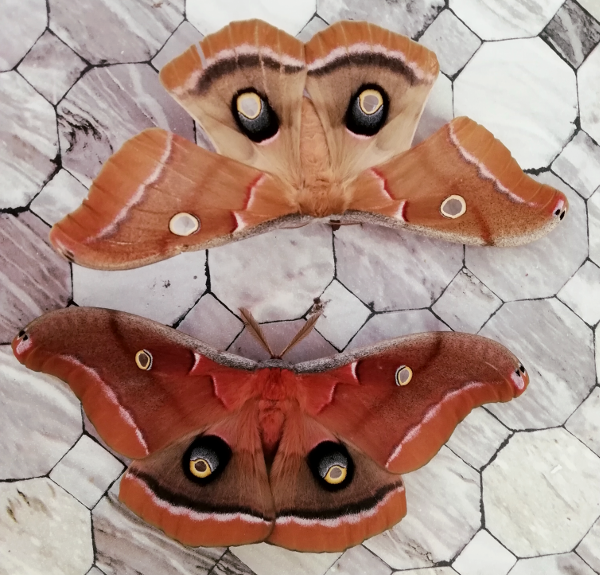
Adult Polyphemus Moths are famous for their impressive wingspan, which typically ranges from 10 to 15 cm (4–6 inches). Their wings display beautiful shades of tan, brown, cream, and reddish tones, with prominent transparent eyespots on the hindwings. These eyespots serve as a defense mechanism, startling predators and giving the appearance of much larger eyes.
Males and females can be easily distinguished. Males possess large, feathery antennae used to detect female pheromones from considerable distances, while females are generally larger and heavier, with broader abdomens adapted for egg production.
Like most giant silk moths, adult Antheraea polyphemus do not feed. Their mouthparts are reduced, and they survive entirely on energy reserves accumulated during the caterpillar stage. Adults usually live between 4 and 10 days, during which they focus exclusively on reproduction.
Hatching Antheraea polyphemus cocoons is relatively simple and makes an excellent project for both beginners and experienced breeders. Upon arrival, remove the cocoons from their packaging and place them inside a well-ventilated emergence cage or mesh enclosure.
The cocoons can either be suspended or placed on the bottom of the enclosure. For successful emergence, maintain the following conditions:
A light misting every few days is usually sufficient to maintain adequate humidity. Adult moths typically emerge during the morning or early afternoon and require several hours to fully expand and harden their wings.
The Polyphemus Moth is considered one of the best giant silk moth species for breeding due to its adaptability and relatively straightforward care requirements. Adults readily mate in captivity under suitable conditions, making this species an excellent choice for breeders wishing to complete the entire life cycle.
Females can lay between 120 and 220 eggs after successful mating. Depending on environmental conditions, eggs usually hatch within 10 to 14 days. Newly emerged caterpillars grow rapidly when provided with fresh host plants and proper environmental conditions.
Larvae pass through five developmental stages, becoming increasingly impressive in size and coloration. Mature caterpillars are bright green with distinctive markings and can reach lengths exceeding 7 cm before spinning their characteristic silk cocoons.
Good ventilation, cleanliness, and access to fresh food plants are essential throughout the larval development period. Under optimal conditions, Antheraea polyphemus is considered one of the easiest Saturniidae species to rear successfully.
One of the greatest advantages of breeding Antheraea polyphemus is its broad range of accepted host plants. Confirmed food plants include:
Among these, oak, birch, maple and willow are generally considered the most reliable and widely used host plants for breeding this species. We succesfully rear them every year on Acer pseudoplatanus
The Polyphemus Moth has become one of the most popular giant silk moth species worldwide due to its spectacular appearance, ease of breeding, and fascinating life cycle. Its impressive size, beautiful wing patterns, and adaptability make it an ideal species for educational projects, scientific observation, photography, and private breeding collections.
Whether you are an experienced Saturniidae breeder, an educator introducing students to insect metamorphosis, or simply a nature enthusiast, our live Antheraea polyphemus cocoons provide a unique opportunity to observe one of North America’s most magnificent moth species from cocoon to adult.
Order your Antheraea polyphemus cocoons today and experience the remarkable transformation of the legendary Polyphemus Moth firsthand.
WhatsApp us