
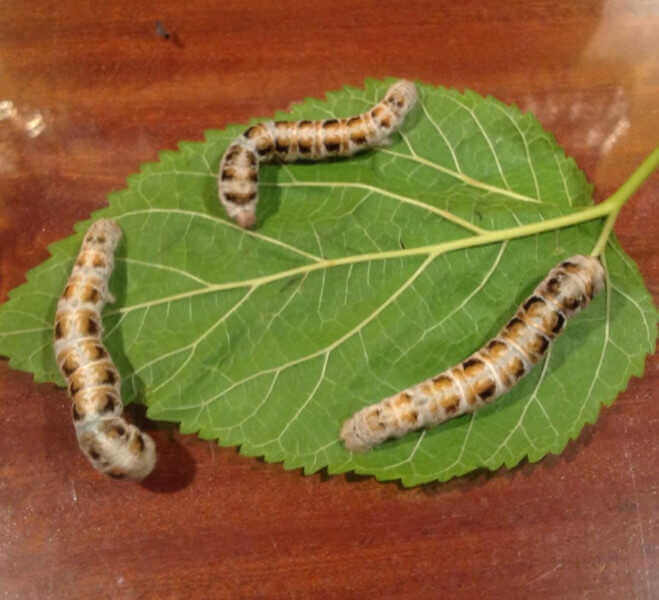


Product: Live eggs of Bombyx mori “G06”
Info: packs of 100 eggs each
Origin: Captive brood
Host Plants: Mulberry (Morus sp.) or diets
Hatching time: Spring or before (read description)
€9,00
In stock
Bombyx mori, commonly known as the domesticated silkworm, is a moth belonging to the family Bombycidae. It is one of the most economically important insects in the world, having been domesticated and selectively bred for thousands of years for the production of natural silk. Its larvae produce the fine silk fibres that have made this species central to the traditional textile industry, particularly in China, where sericulture originated.
The G06 strain is an interesting variety of domesticated silkworm, particularly appreciated for its distinctive larval coloration and beautiful white silk cocoons. Unlike the classic uniformly white silkworm strains, G06 features caterpillars with a particularly attractive and unusual appearance, making it an interesting choice for insect enthusiasts and silkworm breeders looking for something different. Despite its distinctive larval pattern, this strain retains the characteristic ability to produce elegant white silk cocoons.
Bombyx mori is a relatively easy species to rear and breed, making it suitable for both beginners and experienced insect breeders. With proper care, adequate hygiene and a regular food supply, the larvae generally develop reliably. Its natural host plants are mulberry trees (Morus spp.), although commercially available artificial silkworm diets can also be used as an alternative.
This strain is univoltine and normally undergoes diapause at the egg stage. The eggs require a period of cold storage before they can hatch successfully. A chilling period of at least 3 months is generally recommended to complete diapause and ensure proper embryonic development.
The eggs currently available have already been refrigerated for approximately 1.5 months. After receiving them, you can continue the cold-storage period by keeping them in the refrigerator for another 1.5–2 months. Once removed from cold storage and returned to suitable room temperatures, hatching generally occurs within approximately 20 days, depending on temperature and environmental conditions.
Eggs should be kept in a well-ventilated environment at room temperature. During refrigeration, they should instead be stored in a sealed container to prevent excessive moisture loss.
Fresh mulberry leaves are the preferred food for Bombyx mori. If mulberry leaves are not available, a suitable artificial silkworm diet can be used throughout larval development.
A few important precautions will help maintain healthy caterpillars:
With proper feeding and hygiene, the caterpillars will grow rapidly through their five larval instars before spinning their characteristic white silk cocoons. Inside each cocoon, the larva will pupate and eventually emerge as an adult moth, completing the fascinating life cycle of this remarkable domesticated insect.
An excellent choice for silkworm enthusiasts and breeders looking for a distinctive Bombyx mori strain, combining unusual larval coloration with the production of beautiful white silk cocoons.
WhatsApp us